Salt Point History


Salt Point Cultural and Natural History

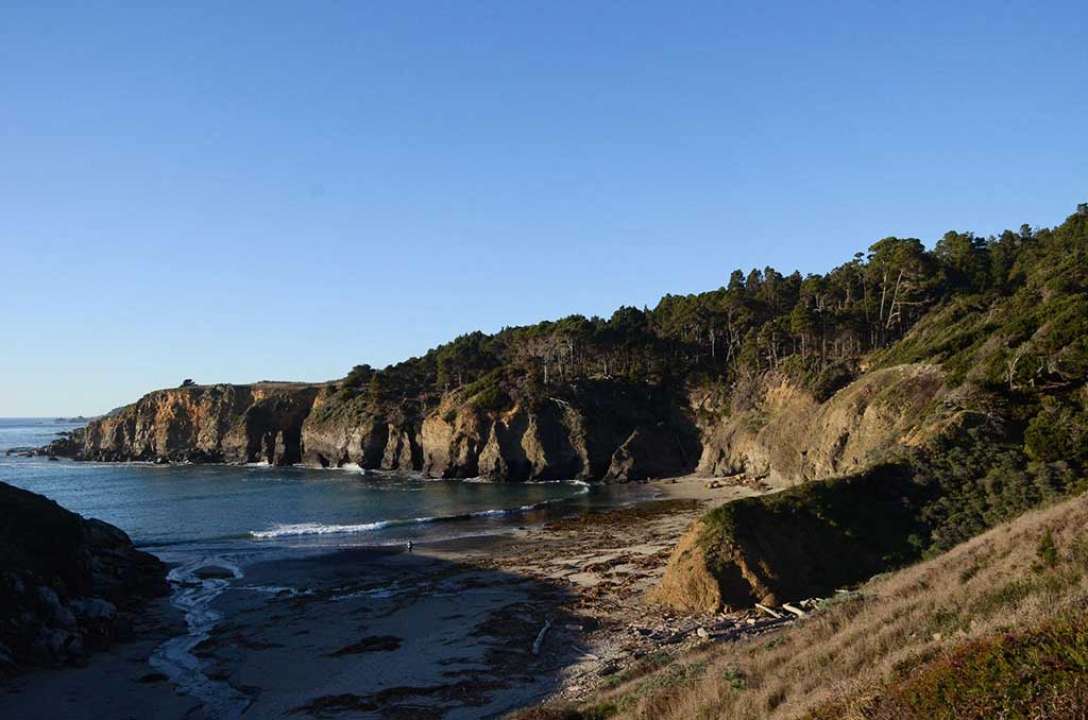
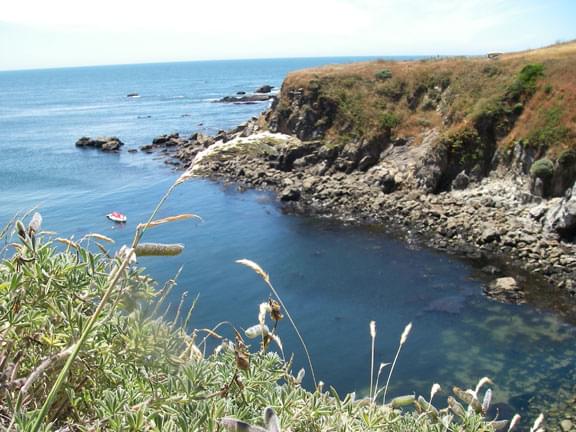
Salt Point State Park is located on the rugged California coastline about 90 miles north of San Francisco on State Highway One. The shoreline of the 6,000-acre park features rocky promontories, such as Salt Point, that jut out into the Pacific Ocean. The park encompasses one of the first underwater parks in California. Fishing is permitted throughout the area with the exception of Gerstle Cove Marine Reserve, where the marine life is completely protected. The inland portion of the park features both grassland and forest areas. As the terrain rises northeast of Highway One, coastal brush and grasslands blend into lush growths of bishop pine, Douglas fir, madrone, tanoak, groves of second growth redwood and quiet meadow areas. At the top of the coastal ridge, at about 1,000 elevation, there is a large open prairie and pygmy forests. There are two campgrounds and more than 20 miles of hiking trails in the park. For more information visit the California State Park Salt Point site.


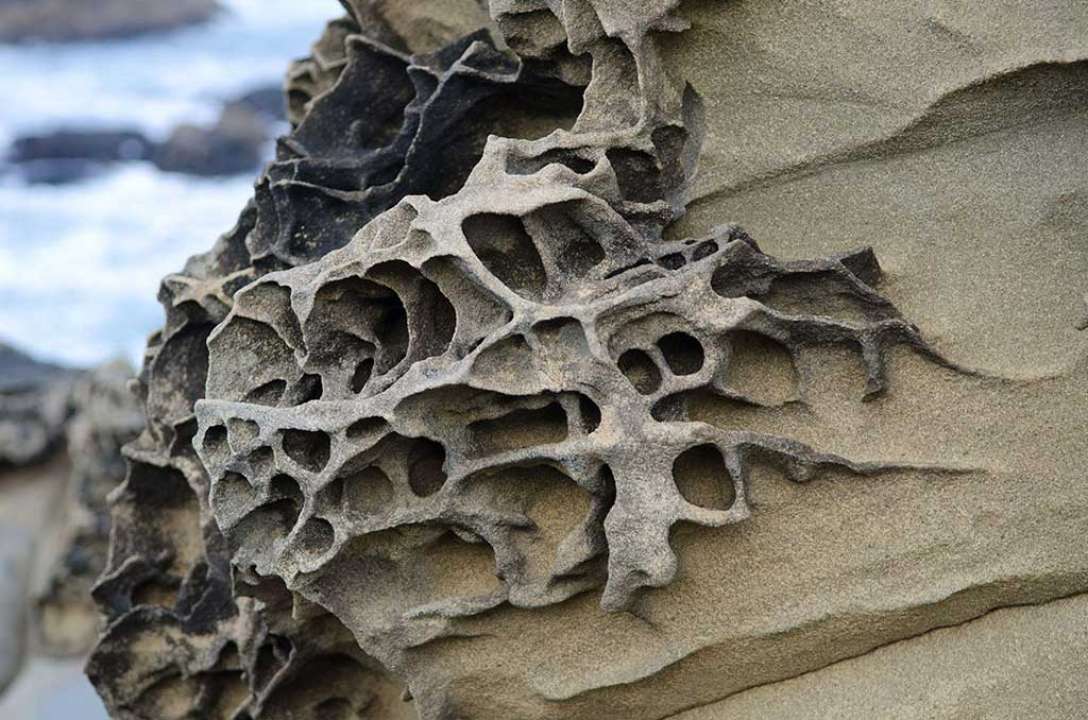
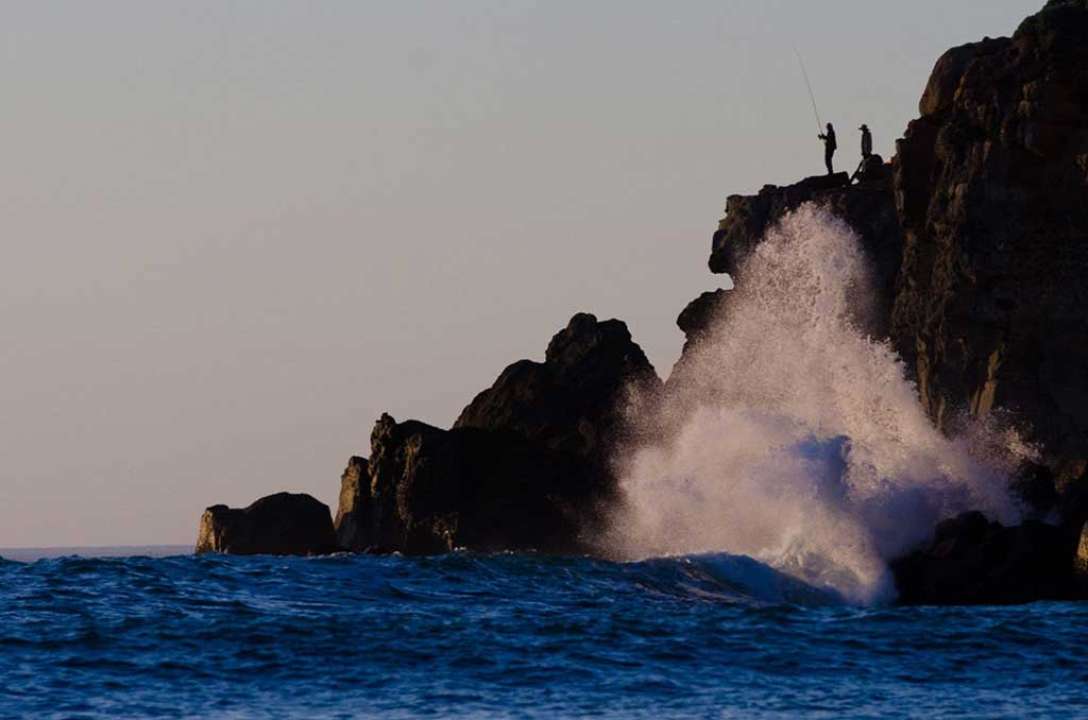
Tafoni & Wave

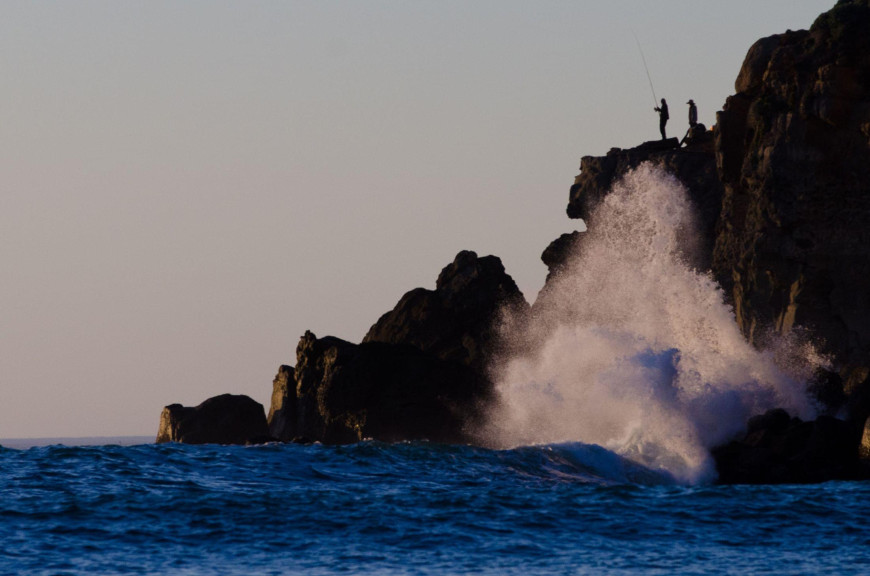
Salt Point is named for the cliffs and crevices of the rocky shoreline where salt from ocean water crystallizes in sandstone depressions. The Native Kashaya Pomo gathered salt here for centuries. One of the most unusual and beautiful features of the sandstone along these sea cliffs is the honeycomb-like network called tafoni. The waves and salt spray leave salt crystals which interact with the sandstone, causing some portions to be hardened, while others are loosened. This creates the lacy, box-like pattern.


Essie Parrish


Kashaya elder Essie Parrish using an abalone chisel to loosen salt crystals at Salt Point, 1961. [ Phoebe Hearst Museum of Anthropology, University of California Berkeley.]


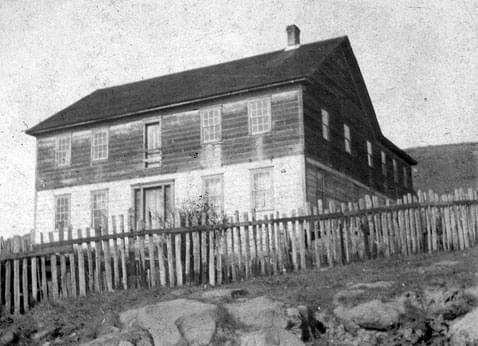
Salt Point RocksThe rocks that rise above the terrace level in the background are ancient sea stacks, similar to the resistant rocks off the coast today that take the initial impact of the waves before they reach the sea cliff. The blocks of sandstone in the foreground were quarried from this site. In 1853, Samuel Duncan and Joshua Hendy established a sawmill on the ridge behind Salt Point. Two years later, they signed a lease authorizing a San Francisco company to quarry sandstone here which was used to construct San Francisco’s streets and buildings, as well as the naval facility at Mare Island. Quarried rocks with visible drill holes can still be seen along the marine terrace north of Gerstle Cove. In 1870 Duncan sold his property to San Francisco businessmen Frederick Funcke and Lewis Gerstle. The Funcke & Co. ranch shipped about 5,000 cords of wood annually, and used the surrounding land for cattle grazing. Their period of ownership, 1870-1881, was the most active in Salt Point's history. A small village known as Louisville developed around Salt Point's shipping facilities at Gerstle Cove. The Salt Point Hotel was built in 1870. The hotel had fifteen rooms and a large hall; it collapsed in 1923. The citizens of Salt Point Township organized parties and holiday celebrations that brought in guests from the ridge and coast.

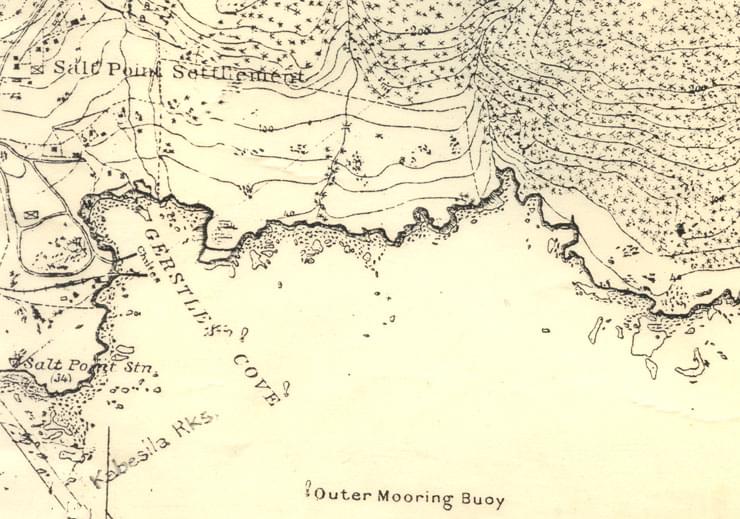
Gerstle Cove

If you look closely at the rocks at Gerstle Cove, you can still see eye bolts where the ships anchored while sandstone slabs were loaded on board. Coastal schooners carried wood and stone products from Salt Point to San Francisco. Prior to the 1870s cargo was loaded on to waiting ships using wire cables anchored to the cliffs. Later there were two loading chutes built at Salt Point: the Miller chute built in 1872, and the Funcke & Co. chute, a public landing, built in 1876. There was a horse-drawn railroad to the landing from W. R. Miller's sawmill located several miles north and east of Salt Point. It employed about 50 men and had a daily capacity of 18,000 board feet of lumber. Contemporary with the sawmill, and outliving it for some time, was the Funcke & Co. tanbark industry. Bark was peeled from tan oak trees and boiled to produce the acid used in tanneries for finishing hides. By the turn of the century there were few trees left. By the 1880s and 1890s, the region had begun an economic decline. There was continued shipping of some wood products, but there was decreasing demand and production of posts, pickets, shingles, and tanbark, and before the end of the century sheep and cattle became the economic base of the region. There was one chute left in 1889, but by 1917 it was abandoned.

Fisk Mill

Fisk MillJohn Colt Fisk came to the Sonoma coast in the fall of 1860 looking for a place to operate his steam sawmill to cut timber for the railroads. He built the sawmill and a chute for loading lumber schooners. The mill and shipping point developed into a small village of several hundred people. Between 1868 and 1874 four hundred thirty-seven schooners stopped at Fisk Mill Cove. By the mid 1870s the milling business was in decline, but the local ranchers continued to use the chute for shipping cordwood and tan bark through the 1890s.Fisk Mill, left, and the lumber chute below.

Fisk Mill Chute


Pygmy Forest

There once were more than 20 different pygmy forests in the Sonoma and Mendocino North Coast area, but now there are only a few, as most were bulldozed in the course of development. The pygmy forest is one of the few places in the world where one can track the complete evolution of soils from their origin to near-depletion. The pygmy forest has a special role to play in illustrating the interdependence of soil and plants in the unique ecosystem formation. Located on the oldest ancient marine terraces, the sandy soils are underlain by an impermeable layer of iron and graywacke sandstone. Over hundreds of thousands of years, acid leached from the trees by rainfall has built up in the infertile soil. Neither plant roots nor water can penetrate the hardpan lying approximately eighteen inches below the soil surface. The white, nutrient-poor, iron-hardpan soil sustains only stunted vegetation, yet the trees may be hundreds of years old. Very few species can eke out a living in this impoverished environment; those that do must struggle mightily. Stands of cypress, pine and even the normally gigantic redwood do not attain normal growth.

Pygmy ForestThe pygmy cypress, Cupressus goveniana subspecies pigmaea, is a rare, single-stemmed, shrubby, evergreen tree with slender crowns and scarce silvery branches encrusted with lichens. Leaf sprays are slender and delicate with scale-like leaves occurring in opposite, alternating pairs. Cones are woody, brown to gray, serotinous (late developing) with umbrella-like scales. Pygmy Cypress is often found with Bolander pine Pinus contorta subspecies bolanderi, but here the pines are mostly Bishop pine Pinus muricata. Other species commonly found in this forest are rhododendron Rhododendron macrophyllum; salal Gaultheria shallon; several species of manzanita Arctostaphylos; coast chinquapin Chrysolepis chrysophylla; California huckleberry Vaccinium ovatum; Labrador tea Ledum glandulosum; and bracken fern Pteridium aquilinum.


Kruse Rhododendron

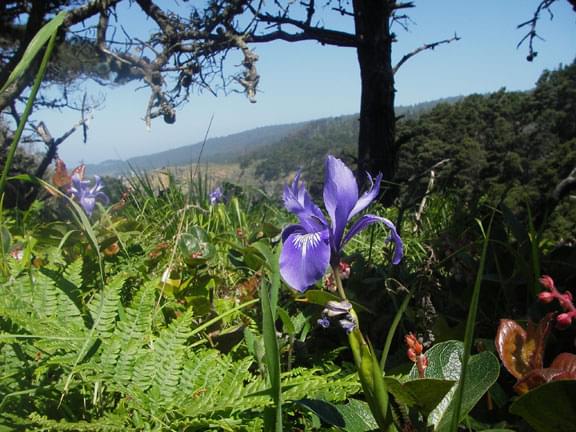
This state reserve is located adjacent to Salt Point and features a beautiful second-growth redwood forest mixed with Douglas firs, grand firs, tanoaks and rhododendrons. Each May patches of pink are scattered throughout the green of the forest as rhododendrons burst into bloom. The wealth of rhododendrons is a direct result of the normal progression of plants following a severe fire that once occurred here. Today the regenerating forest is gradually overwhelming the rhododendrons.

Wells Fargo BuildingThe Post Office and Wells Fargo stage stop serving Fisk Mill and Kruse Ranch is pictured to the left. Today the structure is dilapidated, but still stands beside Highway One just north of Fisk Mill.


Back to Top


Ocean Conditions

Historic Photographs

Gerstle Cove
Tidepools

Pygmy Forest
Pygmy Forest Ecological Staircase

Kruse Rhododendron

Geology of Salt Point

© Fort Ross Interpretive Association
19005 Coast Highway One, Jenner,  CA 95450 •  707 847-3437